

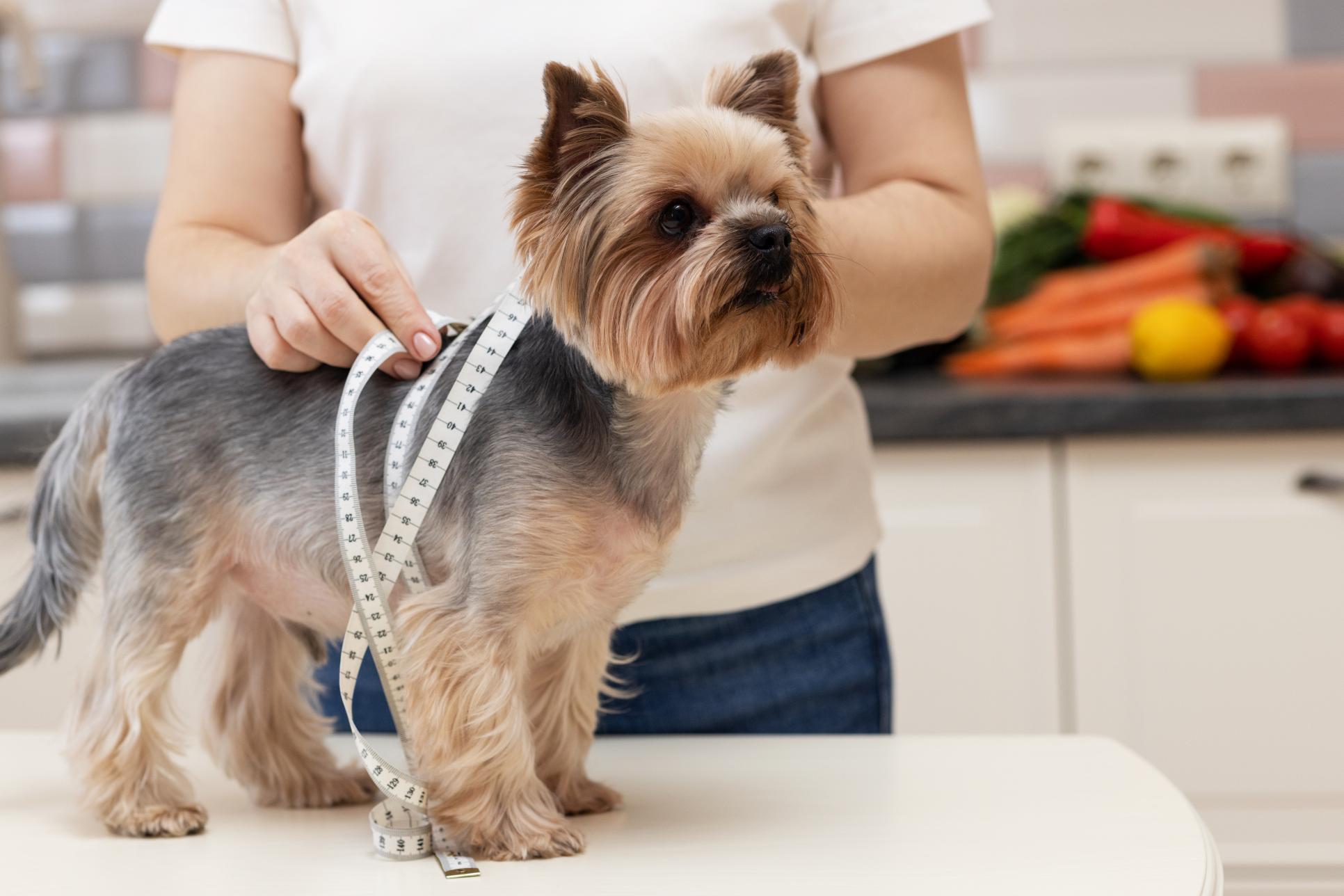
Pet obesity is becoming one of the biggest health problems our furry family members face today. Approximately 60% of dogs and cats live with the condition, according to the Association for Pet Obesity Prevention (APOP). And your pet’s cosmetic image isn’t the point here—their health is.
Here’s what the team at Sky Canyon Animal Hospital wants you to know about overweight pets and pet weight management.
Why Pet Obesity is a Serious Problem
As cute as a chonky pet may look—and be—extra weight comes with very real consequences. Both dog and cat obesity are linked to a variety of health problems, including:
- Arthritis and joint pain
- Diabetes, especially in cats
- Cardiac and respiratory issues
- Some types of cancer
- Shortened lifespan
Pets of a healthy weight—not too large, not too thin—live longer than their peers that aren’t in peak body condition, according to results from a 2023 study published in Frontiers in Veterinary Science.
Who doesn’t want their pet to live a healthier, and therefore more pain-free, life?
Because of the risks that come with obesity in pets, major veterinary organizations like the AAHA and AVMA now describe obesity as a disease that needs treatment rather than just a cosmetic issue.
Is My Pet Overweight?
It can be surprisingly hard to judge whether your own pet is at an ideal weight or not—many pet parents with overweight fur-mily members think their dog or cat looks fine.
The best way to know for sure is to get your pet weighed during her annual wellness checks at your veterinarian. If you’re between visits, here’s how to check your pet’s weight at home:
- Ribs: You should be able to feel your pet’s ribs easily with a light touch—no digging around needed.
- Waist: If you look at your pet from above, there should be a visible narrowing—a waist—behind your pet’s ribs.
- Tummy tuck: From the side, your pet’s belly should slope upward toward his back legs—not hang down like Uncle Jim’s beer belly.
If you’re unsure whether your pet is at a good weight, ask your pet for a body condition score (BCS) at your next wellness visit. This scale measures your pet’s body fat and overall nutritional status based on a scale of 1 to 9 (or sometimes 1 to 5).
The ideal score is somewhere around 4 or 5 on the 9-point scale.
Pet Weight Management: Where to Start
Don’t let yourself feel overwhelmed if your pet is a bit chunkier than is healthy for her. Start with small, consistent steps to help your pet get healthy.
These include:
- Partnering with your vet. Your vet can help you rule out any medical issues that may be affecting your furry friend’s health. They can also help you set a goal weight and ideal diet for your cat or dog.
- Measuring every bite. Use an actual measuring cup or kitchen scale to dole out your pet’s meals. Give her set meal times instead of allowing her to graze from a bowl throughout the day.
- Get moving. Motion is lotion for your pet—and for you! Take your dog for more frequent, slightly longer walks and add games of fetch or hide-and-seek to spice it up. For cats, use short play sessions with wand toys or encourage climbing with an exciting climbing tree.
The Bottom Line
Pet obesity may be common, but it’s more than fixable for most pets. If you can spot weight changes early, work with your veterinary team, and stick to a pet weight management plan, you can help your cat or dog feel better and live longer.
Our caring veterinary team at Sky Canyon Animal Hospital can help you get started on your pet’s journey to optimal health. Call us at (951) 461-4100 to schedule an appointment today!